Victor Cast Iron: History and Identification Guide
History · Markings · Discovery
Your vintage cast iron skillet with the Victor marking places it right in the heart of cast iron history. Made by the Griswold Manufacturing Company as their entry-level or budget-friendly line, for families who wanted quality without paying for the name.
The Table Below Will Place Your Pan In Time
| Victor Cast Iron Skillets | Heat Ring | Approximate Age |
|---|---|---|
| Victor (no pattern number) | Outer | Circa 1886-1892 |
| Victor (3 digit pattern number) | Outer | Circa 1892-1905 |
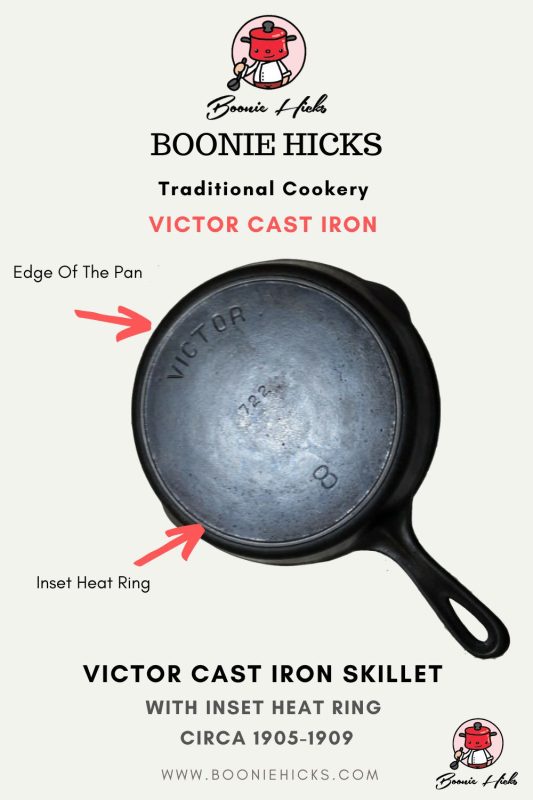
| Victor (3 digit pattern number) | Inset | Circa 1905-1909 |
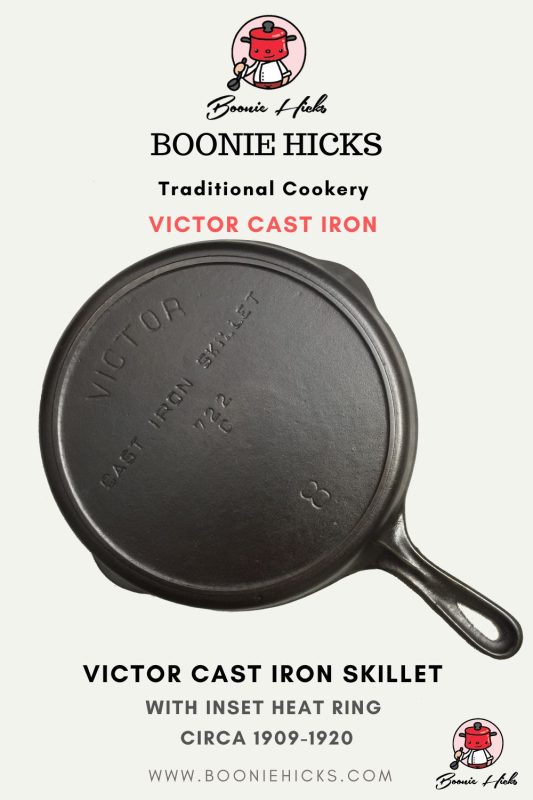
| Victor (marked, 3 lines) | Inset | Circa 1909-1920 |
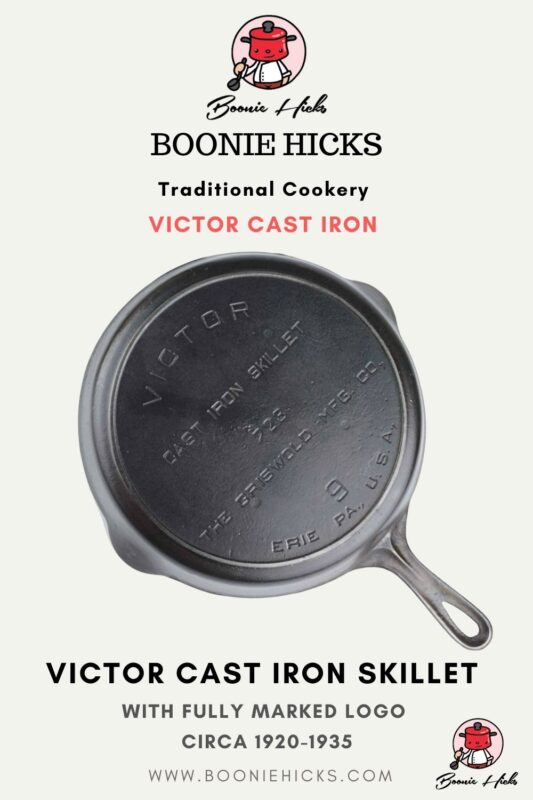
| Victor (fully marked, 5 lines) | Inset | Circa 1920-1935 |
| Unmarked (3 digit pattern number) | Inset | Circa 1910’s-1935 |
Markings Through The Years
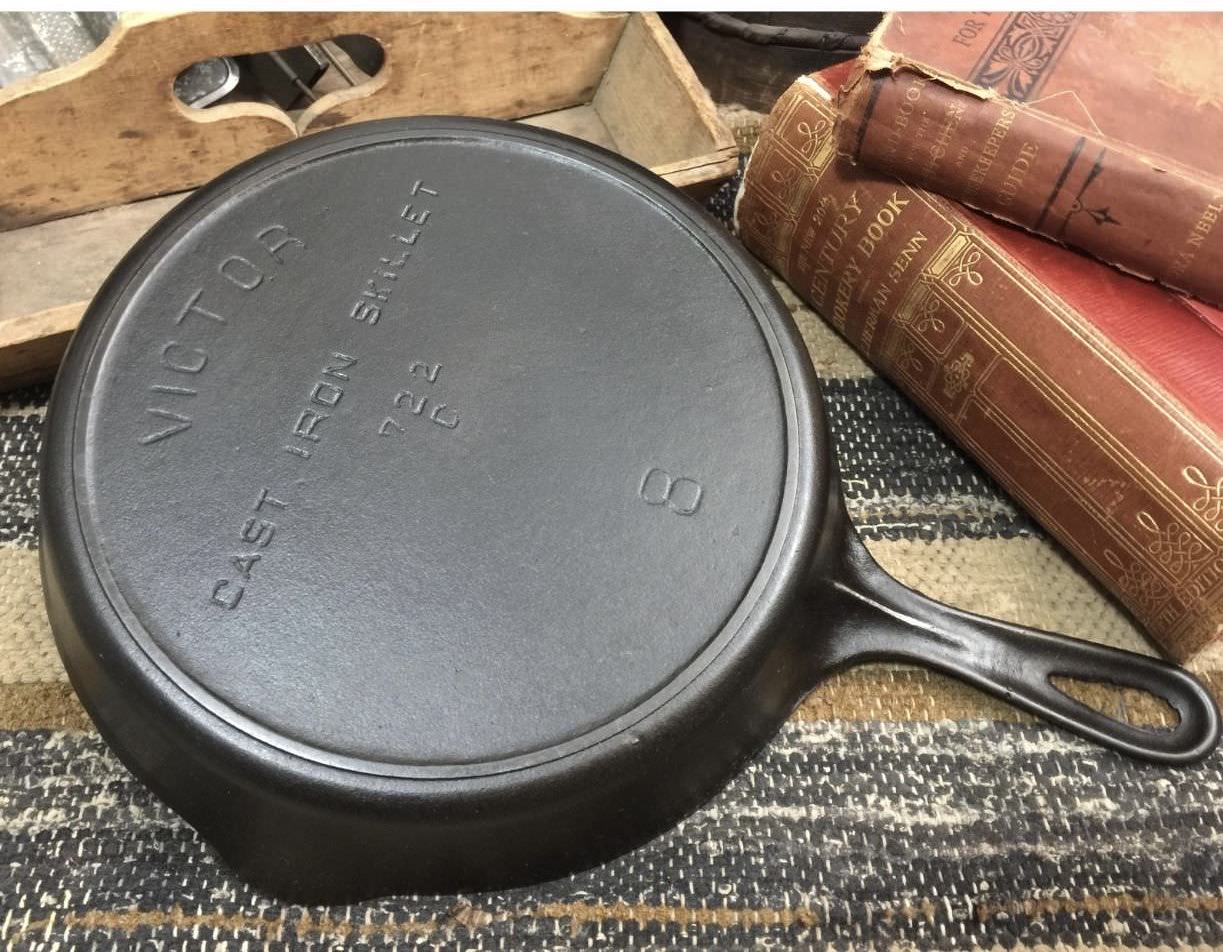
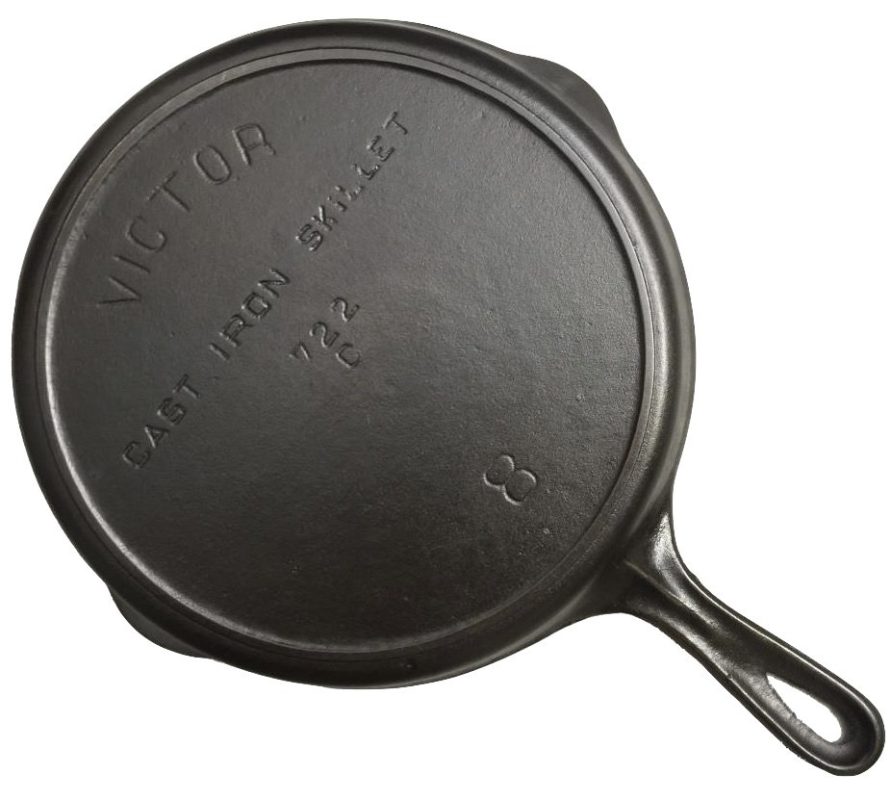
Semi-marked or three lined Victor. Circa: 1909-1920
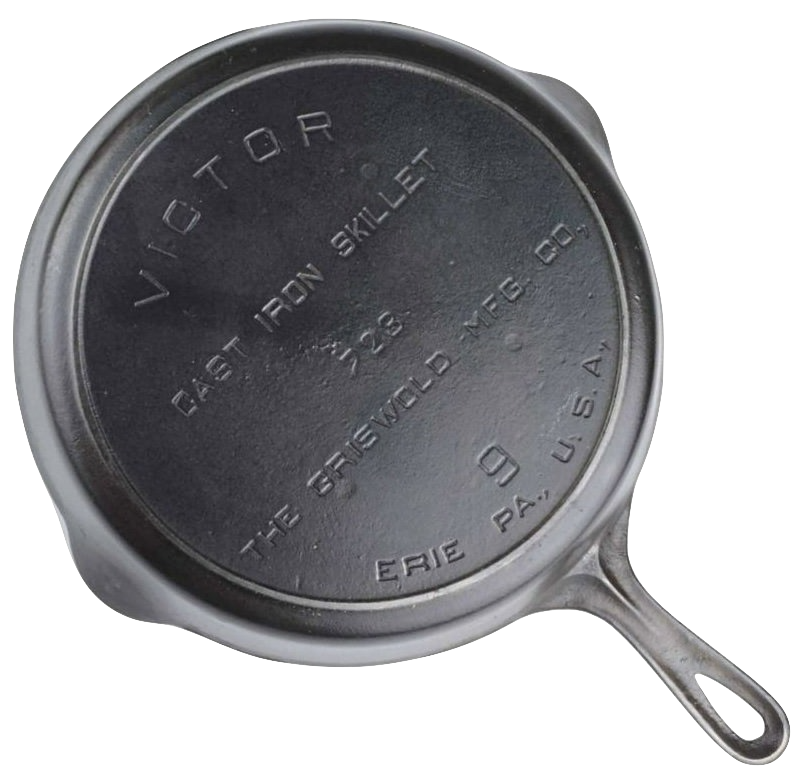
Fully marked or five lined Victor. Circa: 1920-1935
Living Heritage
A Piece of Living History
Early Series Victor · circa 1886-1909
This pan belongs to a moment when many rural kitchens were only just catching up to a change that cities had made a generation earlier. Wood and coal stoves had long since taken over town, but for plenty of families further out, saving for one still took years, and when it finally arrived, it usually went right where the old hearth had been, using the same chimney that had carried smoke out of that kitchen for generations before.
Someone in your family stood in front of a stove like that, morning after morning, with this exact skillet in hand. Long before you ever held it, it was already feeding people who came before you.
Middle Series Victor · circa 1909-1920
By the time your skillet was made, the stove wasn’t new anymore. It was just how a kitchen worked. Changing now was what went into the pan, sugar stretched with honey, wheat cut with cornmeal or barley, meat served a little less often than before. A world conflict overseas was asking more of every household, including whoever cooked with your pan.
Smaller households meant fewer hands to share the work, so neighbors filled the gap, a shared harvest, a borrowed cup of sugar, a meal split further than it was meant to. Whatever was in the pantry, your pan turned it into a meal. Times were hard, but people didn’t stop, they just carried on.
Fully Marked Victor · circa 1920-1935
Your pan came from two completely contrasting periods in history. After years of getting by, the country wanted to celebrate, and the first of these two decades gave it every reason to. Somewhere, a family gathered around their first radio, leaning in close to hear music that had never reached their living room before. New technology, new music, new dances, a real sense that the future had arrived early, and it was bringing something good.
Then, almost overnight, that hope ran thin. Banks closed their doors. Jobs disappeared. But people didn’t stop cooking or dancing, they just got inventive. Families started stretching a pot of macaroni and canned tomatoes into what they’d call Hoover stew, named half-joking after the president everyone blamed. Crackers stood in for apples in a pie filling nobody could tell it wasn’t real. And cornbread, baked in a pan just like yours, went from a way to stretch a little cornmeal into a family favourite that really never left. You might be still making it today, in the very pan that helped families make it through then.
The Foundry Behind Victor Cast Iron Skillets
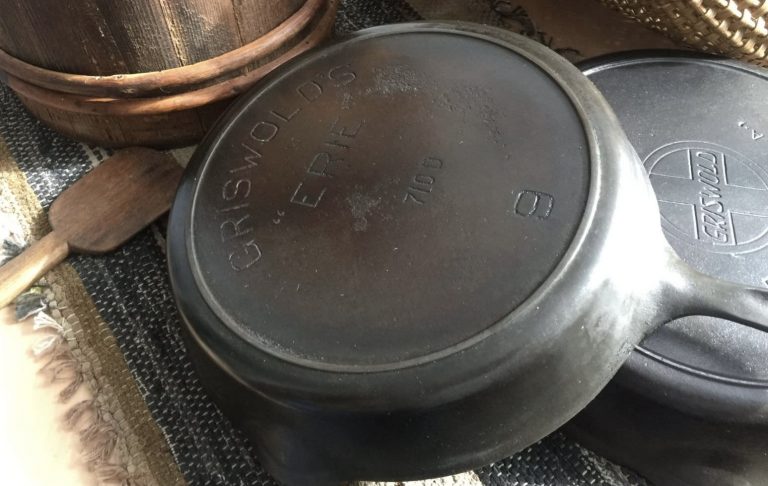
Behind Victor stands a name far bigger than the brand itself: Griswold. Founded in Erie, Pennsylvania, the company built a reputation for high-quality cast iron that has lasted well beyond its own lifetime. The kind of cookware collectors still search for and cooks still reach for today, decades after it was made.
If you’re holding a Victor pan, you’re holding a piece of the same story. It came out of Griswold’s own foundry, boxed using the same molding sand, compacted by a rammer in a foundry-man’s hands. You can expect your Victor was made to the same careful standards you’d expect from a Griswold.
Why make an economy brand?
So why keep the Victor name separate at all, if it was made the same way? Honestly, we don’t know for certain — nobody wrote down the exact reason at the time, or if they did, it hasn’t surfaced yet. But a few good reasons stand out:
- Reaching a different kind of buyer. Not every household could stretch to a Griswold-marked pan, and Victor gave Griswold a way to reach that buyer without touching the price or reputation of the main Erie and Griswold lines — the same reason they later made other economy lines too, including store brands. like Best Made, Puritan, and Merit, made specifically for retailers like Sears Roebuck.
- Added competition on the shelf. Hardware stores of the time often carried more than one brand of skillet, and having a second name gave retailers something to offer shoppers browsing beside a rival’s cookware — even if on the label, it came from the very same foundry.
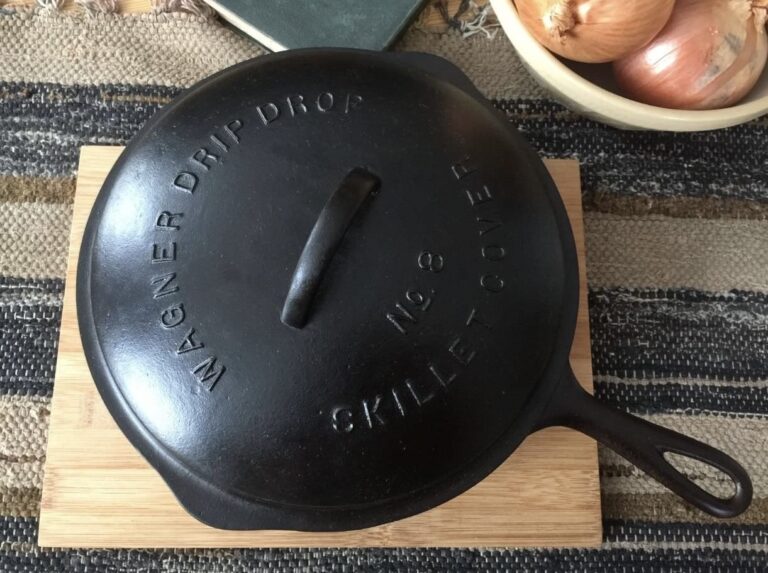
- Keeping up with the competition. Griswold wasn’t the only foundry making cast iron at this time — Wagner Manufacturing, just one state over in Ohio, was a serious rival, and dozens of smaller foundries were casting cookware too. Staying ahead meant having something for every kind of buyer, not just the ones who wanted the name Griswold on the pan.
Whichever reason mattered most, one thing’s clear: Victor wasn’t a compromise. It was Griswold meeting a crowded, competitive market head-on another brand into the same quality and reputation, just priced and positioned a little differently.
Is Victor Cast Iron Any Good?
Here’s a fair question to ask before we go any further: if Victor was the cheaper option, does that mean it’s a worse one?
Not from my experience. Run your hands across the cooking surface, and there’s a good chance. it feels every bit as smooth as any Griswold — I’ve seen plenty of Victor castings with smooth cooking surfaces that go toe-to-toe with the best of them.
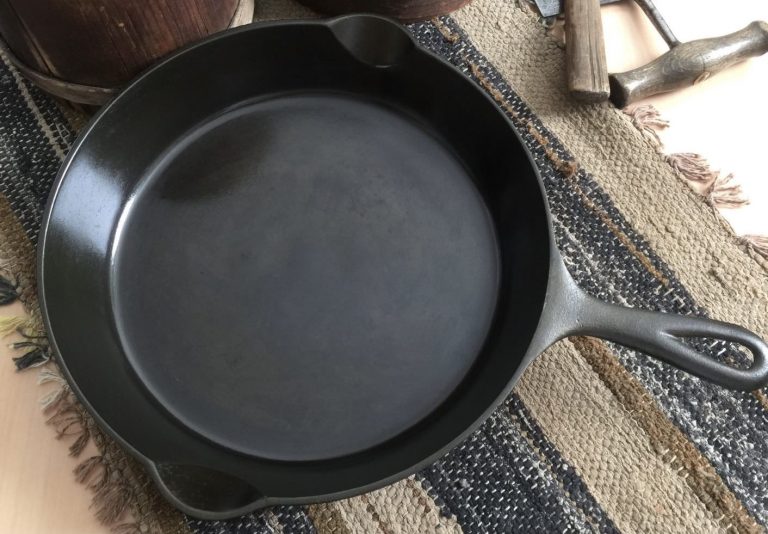
So how do you tell them apart, if the quality’s the same? Look closely and you’ll probably notice your pan sits a touch smaller across, with lower sides than a comparable Griswold — and that smaller size means it’s a little lighter in the hand too. That’s really the only real difference — a little less iron, not a little less of a pan.
Victor Cast Iron Skillet Sizes And Value
The Most Common Sizes Are 7, 8, and 9.
Victor was never meant to come in every size. Griswold kept the lineup narrow — mostly 7, 8, and 9, the sizes still common in kitchens today, big enough for the family meal without taking over the stovetop.
Victor skillets aren’t easy to come by these days. But if you do find one, there’s a good chance it’s a 7,8, or 9 — these sizes Griswold made in the greatest numbers. Sizes 5 and 6 are the ones collectors really watch for. Both of these rare sizes are only on the fully marked pan that included the Griswold name. Size 6 arrived first in the mid-1920s. Size 5 followed a few years later, in the early 1930s — not long before the line ended altogether, in 1935. It seems Griswold didn’t make many of either size which is exactly why finding one is worth getting excited about.
| Skillet Style | Markings | Sizes |
|---|---|---|
| Victor | VICTOR | 7, 8, 9 |
| Victor | VICTOR Three Digit Number | 7, 8, 9 |
| Victor | VICTOR Three Digit Number | 7, 8, 9 |
| Marked (three lines) | VICTOR CAST IRON SKILLET Three Digit Number | 7, 8, 9 |
| Fully Marked Victor Skillet (five lines) | VICTOR CAST IRON SKILLET Three Digit Number THE GRISWOLD MGF. CO ERIE, PA., U.S.A. | 5, 6, 7, 8, 9 |
| Unmarked | Three Digit Number | 7, 8, 9 |
Value
How much is my skillet worth? Honesty, that changes too often for me to pin down here — I’d rather send you somewhere current than hand you a number that’s already gone stale. A quick search of recently sold listings on eBay will tell you more than I can. Just keep one thing in mind: listing prices, especially asking prices, tend to run high — look at what a pan actually sold for, not just what someone’s hoping to get for it.
How Old Is My Victor Cast Iron Skillet?
The table up top will get you close, but if you want to be sure exactly what you’re holding, it comes down to two things: where the heat ring sits, and how much wording is stamped on the bottom.
Heat Ring: Outer or Inset
Look at the underside of your pan. If the raised ring sits right at the outer edge, flush with the rim, you have an early Victor — outer heat rings ran from roughly 1886 to 1905. If the ring is set in slightly from the edge, sitting inside the base rather than the outer border, your pan dates from 1905 onward.
Wording/Markings
This narrows things down further.
| Series | Markings/Wording Identifiers | Approximate Year of Manufacture |
|---|---|---|
| 1. Victor (no pattern number) | VICTOR | Circa 1886-1892 |
| 2. Victor (outer heat ring) | VICTOR Three digit pattern number | Circa 1892-1905 |
| 3. Victor (inset heat ring) | VICTOR Three digit pattern number | Circa 1905-1909 |
| 4. Victor (marked) three lines | VICTOR Three digit pattern number CAST IRON SKILLET | Circa 1909-1920 |
| 5. Victor (fully marked) five lines | VICTOR CAST IRON SKILLET Three digit pattern number THE GRISWOLD MFG,. CO ERIE, PA., U.S.A | Circa 1920-1935 |
| Unmarked (pattern number italicized) | Three digit pattern number (Sometimes single capitalized mold letter) | Circa 1910s-1935 |
Between the heat ring and the markings together, you can usually place a Victor skillet within a few years. Just keep in mind these dates are approximate, not exact switch over points. A foundry doesn’t retool overnight — old patterns likely kept being used alongside new ones for a while, so a pan from right around these transition years could easily carry markings from either side of it. Think of the years less as hard boundaries and more as the best guess collectors have pieced together over time.
In-Depth Victor Cast Iron Skillet Identification
Early Victor Skillets
Early skillets take on the characteristics of early Erie skillets. They have an outer heat ring, and the R in VICTOR resembles the flick on some ERIE skillets.
Because of these identifiers, we can loosely assume the age of the skillet to be circa the 1890s to early 1900s for skillets with a three-digit numbering system in the center of the pan. There are also examples of skillets without the three digits, and are considered the oldest of the Victor pan. Unfortunately of the skillets remaining today many have sulfur pitting on the base, making identifying the first and second series of the pans difficult.
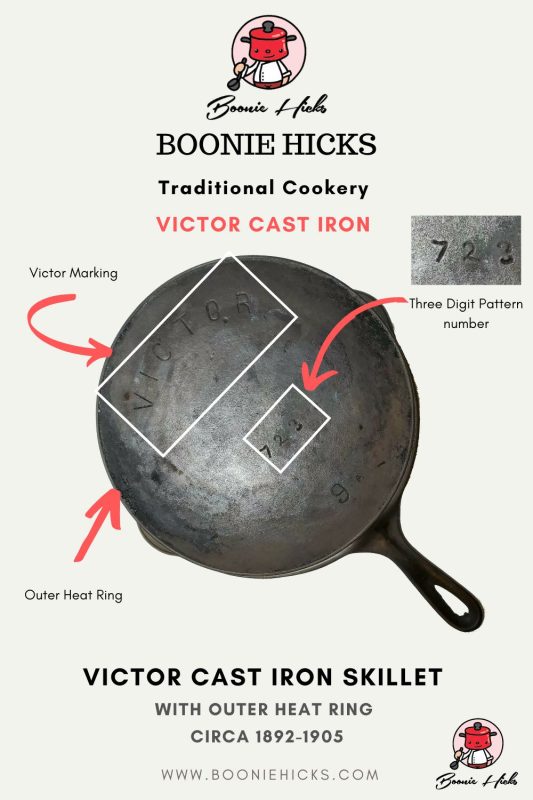
Third series introduces a slight shift in heat ring placement. The shift is seen in other manufacturers of the time and gives a good indication of a later production era.
Vintage cast iron enthusiasts can also determine this skillet comes after the previous logo because of the presence of the inset heat ring. On Erie skillets, inset heat rings were present from the third series from around 1904-1905
Cast Iron Skillet Wording
This logo adds some embellishments to the ironware. The word cast iron skillet is present under the Victor marking.
The Fully Marked Victor Logo
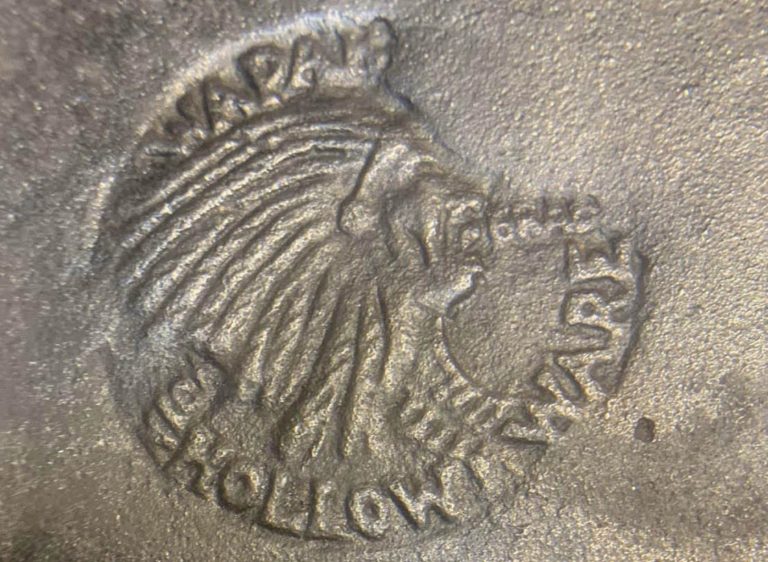
The fully marked logo is a favourite for many Victor Cast iron collectors. Skillets with this marking also have a Griswold and E.P.U. branding. Skillets with this marking are likely to be circa the 1920s onwards. Size number 6 entered the market around the mid-1920s, and size number 5 in the early 1930s.
Victor Cast Iron By Griswold Manufacturing
You came here looking for a date and a marking on your skillet. But I hope you leave feeling a little more connected — to your pan, and the history it carries.
This pan has been in a lot of kitchens — quiet mornings, Sunday dinners, years that were easy and years that weren’t, However, it found its way to you, it’s yours to treasure — enjoy using your vintage skillet.
Sources & further Reading
This article draws on the cast iron collector references for markings, dating, and manufacturing history, along with historical sources on WWI-era food conservation and Depression-era cooking. Full links below for anyone who wants to dig deeper.
Victor markings, dating, and Griswold history
- The Cast Iron Collector — Trademarks & Logos
- The Cast Iron Collector — Economy Brands
- The Cast Iron Collector — Evolution of the Griswold Trademark
- Griswold Cookware — Ask Mary: Griswold “Victor” Skillet
WWI food conservation
Depression-era cooking