Is The Griswold Small Or Large Logo Better?
Griswold Large Logo vs Small Logo
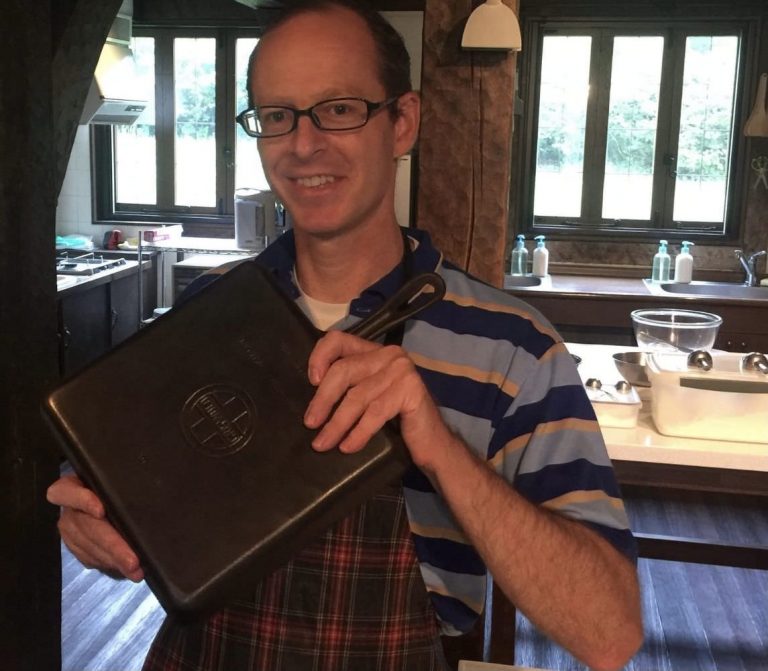
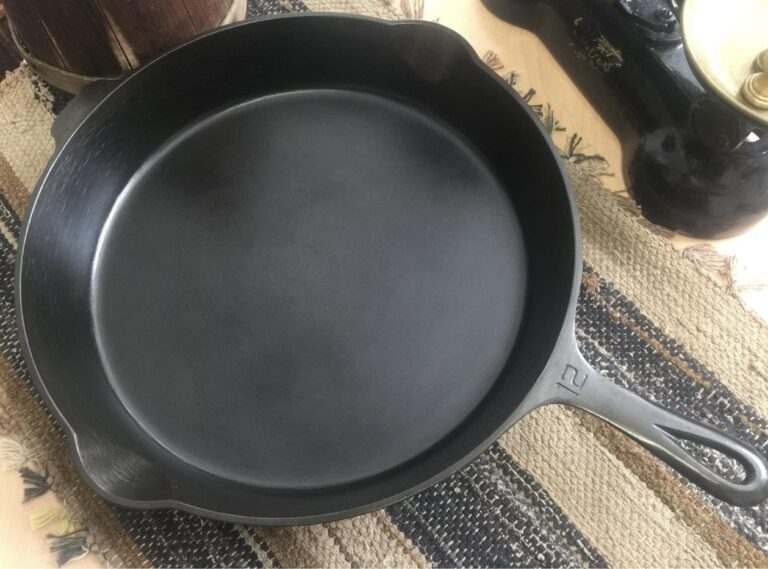
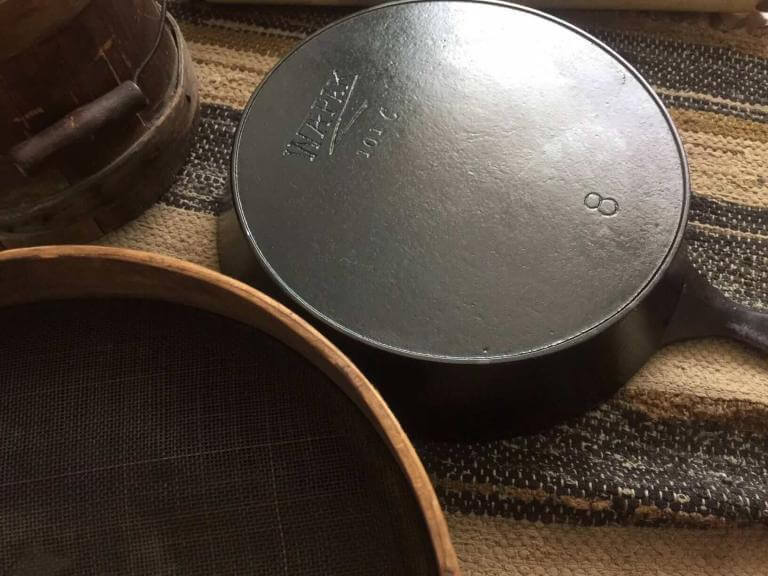
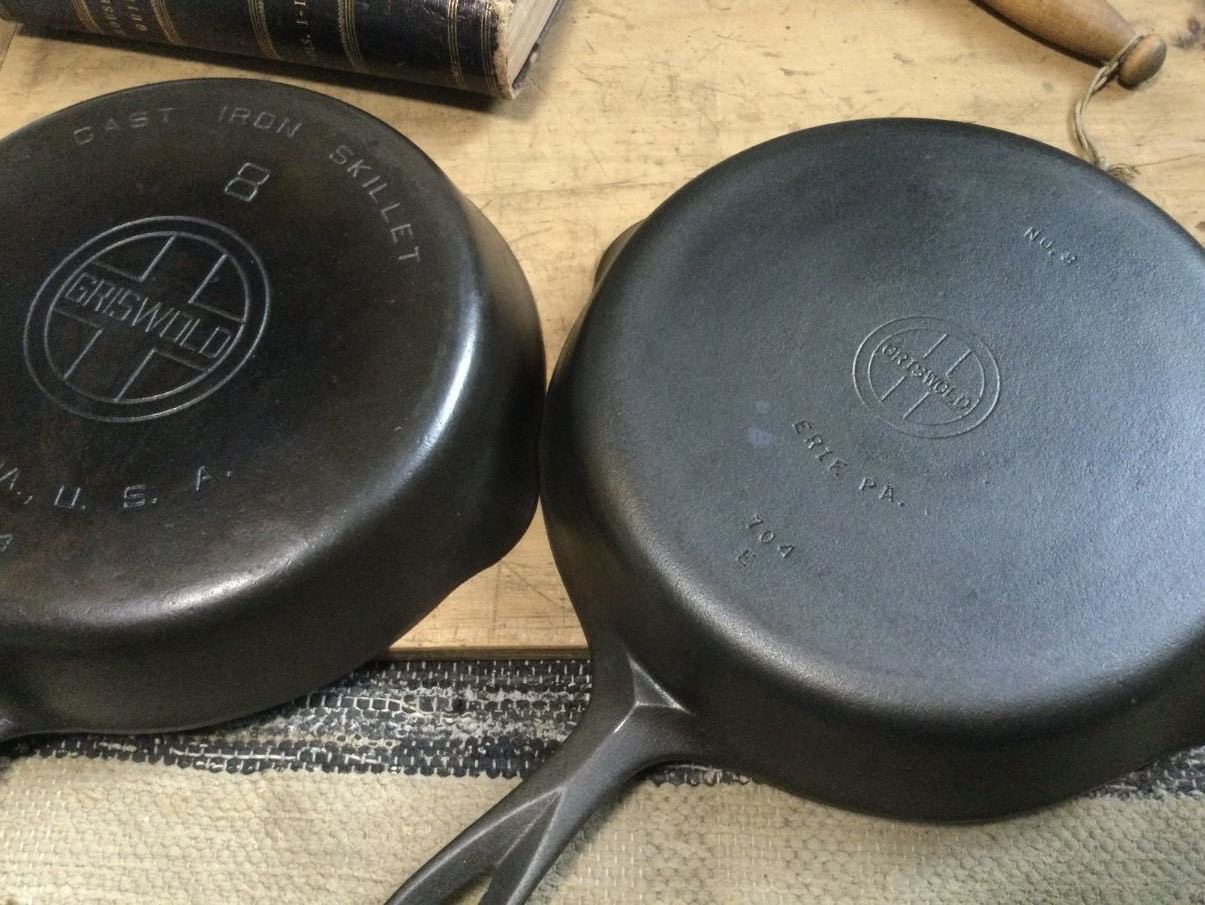
The flea market table is full of restored cast iron, and you know Griswold by name — as many do. You head straight for the skillets, all smooth-bottomed and flat, logos turned up for shoppers to see. Two catch your eye — same size, same condition, same price tag. But the markings stamped into the bottom don’t match. One is bold and takes up most of the base. The other is smaller, plainer, and a fraction of the size.
“That one’s a large logo,” the seller says, nodding at the first. “Small logo on the other.”
You nod back like that settles something. But now you’re not so sure. Is there actually a difference between the pans?
| Griswold Skillet | Large Logo | Small Logo |
|---|---|---|
| Approximate Years | 1930–1939 (smooth-bottom era) | 1939–1957 |
| Logo Size | Large, roughly 3¼”+ across | Small, under 2″ across |
| Wording | “CAST IRON SKILLET” + “ERIE, PA, U.S.A.” | “ERIE, PA.” |
| Lettering | Bold, heavy block letters | Thinner, lighter lettering |
| Heat Ring | Smooth-bottom versions only | None, except for #12 |
| Quick Identification | Logo fills most of the pan’s base | Logo sits small, with open space around it |
Table Of Contents
- Living Heritage
- What Actually Changed in 1939
- Does the Logo Affect Quality or Performance?
- Collectability & Price — What to Actually Expect
- Choose The skillet You Really Want
Living Heritage
A Piece of Living History
Made To Outlast The Kitchen It Started In
Picture the large-block pan first. In the mid-1930s, buying a Griswold skillet meant something. Cast iron wasn’t cheap, and a family bought one expecting to hand it down, not to replace it. That pan sat on the stove through the leanest years of the Depression, cooking whatever there was to cook.
By the time the small-block logo arrived, that same family may have added a second pan to the kitchen — not out of need, just because life had eased enough to allow it. Outside, the country was climbing out of one hard decade and into another, as factories across America turned toward the war effort. Through all of it, Griswold kept casting. However this pan found its way to you — passed down, found at a flea market, pulled from a box in someone’s attic — it was made to outlast the hands that first held it.
The mark tells you which one you’re holding. Around 1939, Griswold began replacing old, worn-out patterns with new ones — that’s why it changed.
What Actually Changed in 1939
Every Griswold started as a hand-carved pattern before it ever became a skillet — someone had to carve that cross-and-circle mark by hand before it could be cast into anything. Through the 1920s and ’30s, that mark was bold and detailed: full lettering, “CAST IRON SKILLET” spelled out, “ERIE, PA, U.S.A.” in full.
Around 1939, Griswold began replacing old, worn-out patterns with new ones — and the new ones carried a smaller, simpler mark. Less detail meant each new pattern could be carved and put into production faster.
It wasn’t a downgrade to the pan. The casting, the machining, the smooth cooking surface — none of that changed. What Griswold sped up was pattern-making, nothing about the pan itself.
Does The Logo Affect Quality Or Performance?
Griswold held its casting, machining, and finishing to a consistent standard across the changeover. A large-block skillet and a small-block skillet came off the same foundry floor, built to the same tolerances.
If a small-block pan ever feels rougher or thinner than a large-block one sitting next to it, check its wear, storage, or restoration history before you blame the logo. Two pans cast in the same year can vary more than two pans thirty years apart.
Collectability & Price — What to Actually Expect
Large-block pans tend to sell for more — they’re older, scarcer, and collectors have favored them longer. But logo era is only one factor in the price, and it’s rarely the deciding one. A large-block pan with pitting or warping will sell for less than a clean, flat, well-seasoned small-block pan every time.
Condition is what actually determines whether a pan is worth buying — the logo just tells you when it was made.
Choose The Skillet You Really Want
I’d take either pan home without a second thought. The smaller mark tells you less than you’d think — Griswold cut a new pattern around 1939 and made the logo more compact because it was quicker to carve. The pan itself never changed.
So don’t overthink the bottom of your skillet. Pick it up. Feel the weight of it, run a thumb across the cooking surface, set it down flat and test whether it rocks. If the condition is fine, you’ll be happy with either pan. But choose the one you see yourself cooking and using for years to come. Whatever mark is stamped on the bottom of the pan you’re holding, or the one you’re still deciding on, it was made by hands that expected you to still be cooking on it decades from now. You are. That’s the whole point of cast iron — logo size has never had anything to do with it.
More Introductory Guides To Griswold Cast Iron:
- Learn to identify the small logo handles
- Different places to buy Griswold ironware
- Beginner’s guide to inspect Griswold skillets
References
Identification & Company History
Living Heritage Research